
What Is Innocent Spouse Relief A Guide to IRS Tax Debt Forgiveness
When you sign a joint tax return with your spouse, you’re telling the IRS that you’re a team. But what happens when one team member plays dirty, leaving you on the hook for a massive tax bill you never saw coming? This is where Innocent Spouse Relief comes in—it’s a critical IRS provision that can protect you from the financial fallout of your spouse's (or ex-spouse's) tax mistakes or fraud.
Essentially, it can release you from paying understated taxes, interest, and penalties that arose from a joint return you signed without knowing about the errors.
The Foundation of Joint Tax Liability and Relief

When a married couple files jointly, the IRS holds them to a standard called joint and several liability. It’s a legal way of saying that each person is 100% responsible for the entire tax debt shown on that return—no matter who earned the income or made the mistake.
Think of it like co-signing a loan. Even if the other person racks up the debt and disappears, the bank can still come after you for the full amount. The IRS operates the same way. This responsibility doesn’t just vanish if you get divorced; it can follow you for years.
When Fairness Demands a Second Look
This system makes sense when both partners are transparent and acting in good faith. But real life is often more complicated. What if one spouse hides income, takes bogus deductions, or commits outright tax fraud without the other's knowledge?
That’s precisely why the Innocent Spouse Relief rules exist. They create a formal pathway for you to ask the IRS to set aside the joint liability rule because it would be profoundly unfair to hold you responsible. The original legislation was passed back in 1971 to address this very issue, which was becoming more widespread as nearly 95% of married couples opted to file jointly. The rules were later expanded and strengthened in 1998, creating the three paths to relief we have today. You can get a deeper sense of how these protections developed by reviewing this history of taxpayer relief on FreemanLaw.com.
Key Takeaway: Innocent Spouse Relief is not a get-out-of-jail-free card. It's a formal case you must build and present to the IRS, proving with clear evidence that it would be inequitable to force you to pay for tax errors you knew nothing about.
A successful claim can separate your financial fate from your spouse's, absolving you of the debt entirely. To get there, the IRS provides three distinct avenues for relief.
The Three Types of Tax Relief
Before diving deep into the specifics of each option, it's helpful to see how they compare at a high level. Each one is designed for a different set of circumstances.
Quick Overview of the Three Types of Tax Relief
| Type of Relief | Primary Goal | Best For |
|---|---|---|
| Innocent Spouse Relief | To be completely absolved of an understated tax liability created by your spouse's errors without your knowledge. | Spouses (married or formerly married) who can prove they were genuinely unaware of the specific incorrect items on the return. |
| Separation of Liability | To divide (or "separate") the tax debt from a joint return, making you responsible only for your portion. | Divorced, legally separated, or widowed individuals, or those who have lived apart from their spouse for at least 12 months. |
| Equitable Relief | To provide a "last chance" for fairness when you don't qualify for the other two, but it would still be unfair to hold you liable. | Individuals who knew about the error but were victims of abuse, or those dealing with an underpayment of tax (not an understatement). |
Understanding which of these categories best fits your story is the first and most important step toward getting this tax burden off your shoulders and reclaiming your financial future.
Exploring the Three Paths to IRS Tax Relief
When you sign a joint tax return, the IRS generally sees you and your spouse as a single financial unit, equally responsible for the entire tax bill. But what happens when one spouse racks up a huge tax debt without the other’s knowledge? The IRS recognizes this isn't always fair, which is why it created three distinct routes to relief.
Think of these as different tools for different jobs. Each one is designed to fix a specific kind of unfair tax situation. Picking the right one from the start is the most critical decision you'll make. Let's dig into each option to see how they work and who they're for.
Path 1: Traditional Innocent Spouse Relief
This is the classic, most well-known form of relief. If you qualify, it’s like the tax debt never existed for you—you get complete absolution. The entire case hinges on proving you were genuinely in the dark about the "erroneous item" that created the tax mess in the first place.
So, what’s an “erroneous item”? It’s usually one of two things:
- Unreported Income: Your spouse earned money and conveniently left it off the tax return.
- Incorrect Deduction, Credit, or Basis: Your spouse claimed a bogus deduction or credit to artificially lower the tax bill or inflate the refund.
To win your case, you have to pass the "reason to know" test. This means convincing the IRS not only that you had no actual knowledge of the mistake, but that a reasonable person in your shoes wouldn't have known either. For example, if your reported income was modest but your spouse was suddenly buying luxury cars and taking you on lavish vacations, the IRS will likely argue you had a pretty good "reason to know" something was off.
Path 2: Separation of Liability Relief
If you're no longer with your spouse, this option works like a financial scalpel, neatly dividing the tax liability. Instead of wiping the slate clean, it allocates the tax debt between you and your ex-spouse based on who was actually responsible for the errors. You’ll only be on the hook for the tax related to your own income and deductions.
This path is only open to people who are:
- Divorced
- Legally separated
- Widowed
- Have not lived with the other spouse for at least 12 consecutive months before filing the claim.
What's interesting here is that you can actually know about the tax issue and still potentially qualify. The big exception is if the IRS can prove that you and your spouse were transferring assets between each other as part of a fraudulent scheme to dodge taxes. If that’s the case, your claim is dead on arrival.
Path 3: Equitable Relief
Think of Equitable Relief as the ultimate safety net. It’s for people who don't quite fit the strict rules for the other two options, but for whom it would be fundamentally unfair to force them to pay the tax. This is the most flexible category, where the IRS looks at the big picture—"all the facts and circumstances."
For Equitable Relief, the IRS essentially asks one powerful question: "Considering everything, would it be unfair to hold you liable for this tax?" The answer depends on things like severe economic hardship, spousal abuse or coercion, and whether you actually benefited from the unpaid tax.
This is also the only type of relief available for an underpayment of tax. That’s when the tax was calculated correctly on the return, but the bill was simply never paid. The other two relief types only apply to an understatement (an error on the return itself). If you knew your spouse was fudging the numbers but were forced to sign the return under duress, Equitable Relief is probably your only shot. It can also be a powerful tool when used with other tax resolution strategies. For instance, you can learn more about how the IRS settles tax debt for less in our guide to the Offer in Compromise program.
Comparing the Three Relief Options Head-On
It can be tough to keep the rules straight. Seeing the requirements laid out side-by-side really helps clarify which path might be the right one for your specific situation. The smallest detail can make a huge difference.
Comparing Innocent Spouse, Separation of Liability, and Equitable Relief
| Criteria | Innocent Spouse Relief | Separation of Liability | Equitable Relief |
|---|---|---|---|
| Marital Status | Can be married, separated, or divorced. | Must be divorced, legally separated, widowed, or living apart for 12+ months. | Can be married, separated, or divorced. |
| Knowledge of Error | Must prove you did not know and had no reason to know of the error. | Knowledge of the error is generally not a disqualifier (unless fraudulent). | Knowledge is a strong negative factor, but relief is still possible (e.g., due to duress or abuse). |
| Type of Tax Issue | Applies only to understated tax from erroneous items. | Applies only to understated tax from erroneous items. | Applies to both understated tax and underpaid tax. |
| Outcome | Full (or partial) absolution from the tax debt. | Allocates the tax debt between you and the other spouse. | Full (or partial) absolution, depending on what is fair under the circumstances. |
As you can see, each path requires a unique argument backed by very specific evidence. Understanding these core differences is the first and most important step in building a compelling case to free yourself from a tax debt that was never your fault to begin with.
Are You Actually Eligible for Relief?
Thinking you qualify for innocent spouse relief is one thing; proving it to the IRS is another battle entirely. It’s not enough to say you were in the dark about a tax problem. The IRS has a very specific, and frankly, very tough, set of rules they use to judge every claim. You’re the one who has to build a convincing case.
Let's walk through what the IRS is really looking for. This isn't just a glance at a form; it's a deep dive into your financial life for the year in question. They'll scrutinize everything—your education, your familiarity with finances, and how involved you were in the household budget. A winning claim tells a clear story, and that story needs to be backed up with solid proof.
The "Knowledge" Test: What Did You Really Know?
This is the biggest hurdle for most people. The IRS drills down on whether you had "actual knowledge" of the tax error or simply a "reason to know" something was wrong. It’s a fine line, but it’s the difference between a successful claim and a rejection letter.
-
Actual Knowledge: This is straightforward. It means you knew, without a doubt, that your spouse was hiding income or taking deductions they weren't entitled to when you signed the return. If the IRS can prove this, your chances of getting traditional Innocent Spouse Relief or Separation of Liability are practically zero.
-
Reason to Know: This is where things get murky and where most cases are decided. The IRS essentially asks: would a reasonable person in your shoes have become suspicious? They're hunting for red flags you might have overlooked, intentionally or not.
The Question That Matters Most: The IRS is essentially asking, "When you signed that return, did you know—or should you have known—that the tax reported was wrong?" Your entire argument hinges on being able to prove the answer is a resounding "no."
Here’s a classic example. Imagine a couple files a joint return claiming a modest income of $75,000. But that same year, they bought a brand-new luxury car and took a couple of lavish overseas holidays. The IRS will see that extravagant lifestyle as a glaring sign that the requesting spouse had a "reason to know" the income on the tax return didn't add up. Be prepared to explain how your lifestyle matched the income you reported.
Common Deal-Breakers That Get Claims Denied
While every situation has its own unique details, the IRS tends to deny claims for a handful of common reasons. Knowing these pitfalls upfront can help you tackle them directly in your application or, just as importantly, help you recognize if your case has a fatal flaw from the start.
Being brutally honest with yourself about these issues is critical. If you try to hide or downplay them, the IRS will almost certainly find out and deny your request.
Here are the most common reasons a claim gets shot down:
- You Participated in the Scheme: If you were an active participant—helping to manage the undeclared side business or knowingly benefiting from a fraudulent transaction—your claim is dead on arrival.
- You Received a "Significant Benefit": Did the unpaid tax fund an unusually lavish lifestyle for you? Normal household support is one thing. But if the fraud paid for things you otherwise couldn't afford, the IRS will argue it's not unfair to hold you accountable.
- You Were "Willfully Blind": This is when you deliberately choose to look the other way. If your spouse told you, "Don't ask where the money is coming from," and you didn't, the IRS will likely argue you were willfully blind to the fraud.
- You Transferred Assets: Did you or your spouse start moving property around to hide assets from the IRS after the tax problem surfaced? Any transfers like this look incredibly suspicious and can be grounds for immediate disqualification.
- You Failed to Cooperate: You have to give the IRS the information they ask for and be truthful throughout the entire process. Clamming up, refusing to provide documents, or giving false information will destroy your credibility and your case.
Getting a firm grasp on these eligibility rules is your first step. A realistic look at what you knew, how you lived, and whether any of these red flags apply to your situation is absolutely essential before you even think about filling out the paperwork.
Navigating the Application Process for Innocent Spouse Relief
Successfully filing for innocent spouse relief comes down to putting together a meticulous, persuasive, and well-documented application. The centerpiece of this entire effort is IRS Form 8857, Request for Innocent Spouse Relief. This isn't just another government form to fill out; it's your one shot to tell a compelling story, backed by hard evidence, explaining why holding you responsible for a tax debt you didn't create would be unfair.
The application requires much more than just checking a few boxes. It demands a detailed narrative of your circumstances, your lack of knowledge about the tax error, and any difficult situations—like financial abuse or coercion—that might have been involved. Think of it as building a legal case on paper. Every single claim you make needs to be supported.
Your First Step: The Critical Form 8857
The path to getting out from under an unjust tax bill begins with Form 8857. You'll use this single form to apply for any of the three types of relief: traditional innocent spouse relief, separation of liability, or equitable relief. From there, the IRS will review your complete submission and decide which type, if any, fits your situation.
A huge part of this form is the section where you tell your side of the story. This is where you connect the dots for the IRS agent reviewing your file. You need to detail your involvement (or, more likely, lack of involvement) in your household's finances, describe your spouse's behavior, and clearly explain why you had no reason to know about the understated tax. Being vague is the fastest way to get a denial. Being specific, honest, and thorough is what gets a case approved.
The financial details the IRS expects can be overwhelming, which is a common theme in complex tax filings. For instance, our guide on completing Form 433-A for an Offer in Compromise gives you an idea of just how deep these financial disclosures have to go.
Meeting the Strict Filing Deadlines
When it comes to the IRS, timing is everything. For traditional innocent spouse relief and separation of liability, you generally have to file Form 8857 within two years of the date the IRS first tried to collect the tax from you. This "first collection activity" could be something like a notice of intent to levy or the IRS taking your tax refund.
Crucial Timing: That two-year clock is completely unforgiving. If you miss this deadline for traditional or separation of liability relief, you're automatically disqualified from those options. That leaves equitable relief as your only remaining hope.
The rules for equitable relief are a bit more flexible and are generally tied to the overall ten-year statute of limitations for collections. Still, you should never wait. Filing quickly shows you're taking the matter seriously and prevents you from accidentally missing a critical date.
This flow chart gives you a quick visual on the main questions the IRS will be asking as they look at your case.
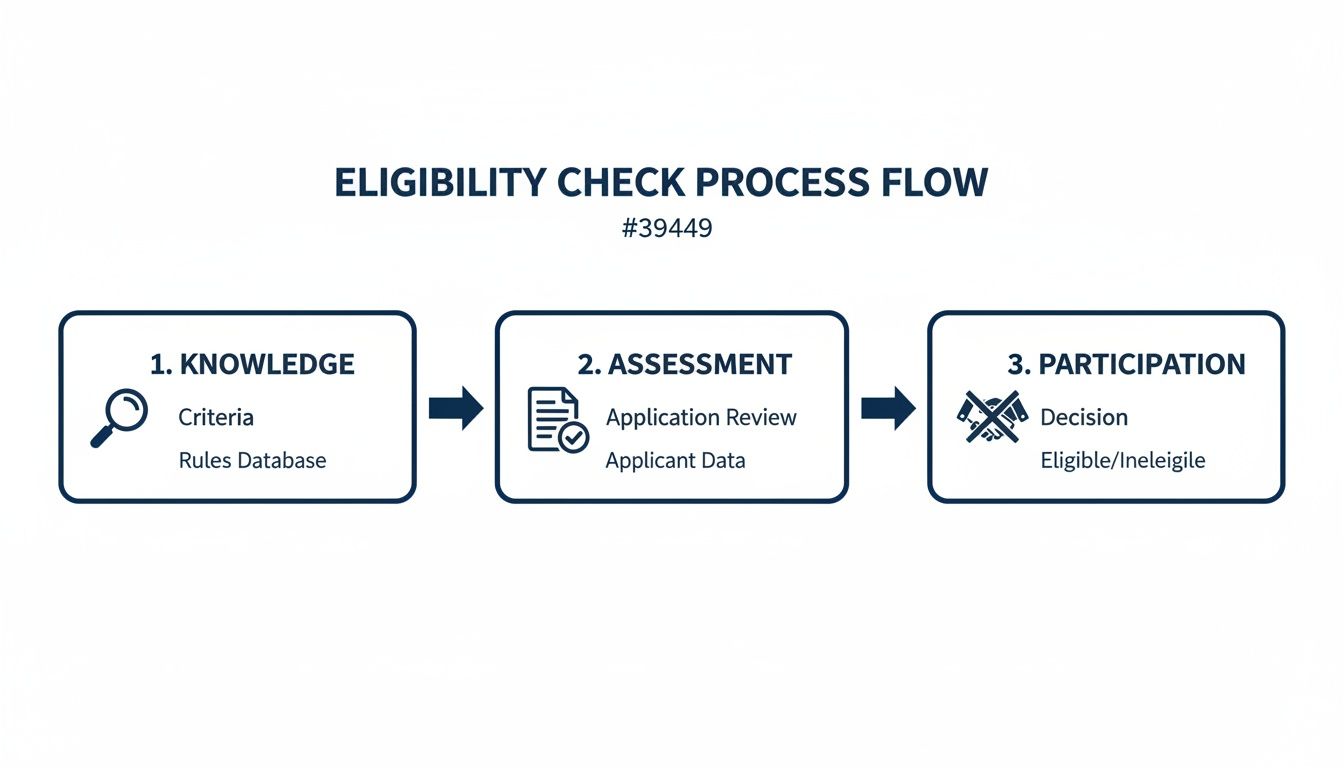
As you can see, the strength of your claim really boils down to proving you were neither aware of nor a willing participant in the financial mistake.
Gathering Your Evidence to Build a Powerful Case
The story you tell on Form 8857 is the skeleton of your case. The evidence you submit is what gives it muscle. You have to provide concrete proof that backs up everything you say. The more thorough your documentation is, the more credible your claim will be.
As you get your documents in order, using solid document management best practices can make the whole process smoother and less stressful.
Here are some of the most common types of evidence you'll need:
- Proof of Marital Status: Divorce decrees and legal separation agreements are absolutely vital, especially if you're asking for separation of liability relief.
- Financial Records: Bank statements from the year in question can help show that you didn't receive a "significant benefit" from the unpaid tax money.
- Evidence of Abuse or Control: If you were a victim of domestic abuse or financial coercion, provide any documents you have to prove it. This might include police reports, court orders, or even written statements from friends, family, or counselors who knew what was happening.
- Proof of Exclusion from Finances: Did your spouse handle everything and keep you in the dark? You need to show it. Maybe bills were sent to a P.O. box you didn't have a key for, or perhaps your name wasn't on the main bank accounts. Gather whatever you can to prove it.
Putting together a compelling application is a detailed, demanding process. But by carefully completing Form 8857, respecting every deadline, and assembling a powerful collection of evidence, you give yourself the best possible chance of success.
What Happens After You File Your Claim
Filing Form 8857 is a significant milestone, but it’s really just the start of the journey. Now, the IRS review process begins. Knowing what’s coming down the pike can help you manage the stress of waiting and prepare for what comes next.
The very first thing the IRS is legally required to do is contact your spouse (or ex-spouse) and let them know you’ve filed for relief. This isn't optional. It’s their chance to participate, and they have the right to submit their own information to argue against your claim. Be prepared for this, as it can sometimes add an emotional and complex layer to the proceedings.
The IRS Review and Communication Process
After notifying your spouse, the IRS assigns your case to an agent. This agent will dive deep into your Form 8857 and all the documents you sent along with it. Their job is to see if your story and evidence line up with the strict legal tests for innocent spouse, separation of liability, or equitable relief.
It’s completely normal for the IRS to reach out for more information during this phase. They might ask for additional bank statements, want you to clarify something you wrote in your statement, or need more proof about your circumstances from a specific year. Getting these requests and responding quickly and thoroughly is key to keeping your case on track.
Important Note: Don't panic if the IRS asks for more details. A request for information isn't a red flag. It actually means a real person is actively working on your case and taking it seriously. See it as an opportunity to make your argument even stronger.
Be ready for a long wait. The entire review can easily take six months to a year, sometimes even longer, before you get a final decision. The good news is that while your claim is under review, the IRS will typically pause collection actions against you for that specific tax debt.
Possible Outcomes and Your Appeal Rights
Once the investigation wraps up, you’ll receive an official determination letter in the mail explaining the decision. It will fall into one of three categories, and knowing what they mean will help you figure out your next steps.
- Full Relief Granted: This is the ideal outcome. The IRS agrees you qualify and completely wipes away your responsibility for the tax debt, including any related interest and penalties.
- Partial Relief Granted: Sometimes the IRS will grant relief for certain tax years but not others. They might also separate the liability, meaning you are still on the hook for a portion of the tax debt, but a much smaller, more manageable amount.
- Claim Denied: This means the IRS determined your situation didn't meet the legal requirements for any of the three types of innocent spouse relief.
A denial can feel devastating, but it’s not always the final word. These cases are tough to win. In Fiscal Year 2017, for instance, the IRS only granted full relief in 39% of cases, while 48% were denied outright. You can find more of these IRS relief statistics on the Taxpayer Advocate Service website. These numbers just go to show how critical it is to build a rock-solid case from the very beginning.
If your claim is denied, you have the right to appeal. You can take your case to the U.S. Tax Court, where a judge will give it a fresh look. This right to an independent judicial review is an incredibly important protection. It's also wise to consider other avenues, like asking for a tax penalty reduction, which might fit into a larger strategy. If that sounds relevant, our guide on requesting penalty abatement using Form 843 is a great resource.
Why an Experienced Tax Attorney Is Your Strongest Advocate

Sure, you can technically file Form 8857 on your own. But the hard truth is that winning innocent spouse relief is an uphill battle. With the IRS denying nearly half of all claims, having a professional in your corner isn't just a convenience—it's a critical strategic move.
Working with an experienced tax attorney completely changes the game. They do so much more than fill out forms. Think of them as your legal strategist, someone who knows exactly what an IRS agent looks for and can anticipate the arguments they’ll make against your case. Their job is to translate your personal story into a powerful legal argument that squarely meets the IRS's stringent criteria.
Crafting a Winning Legal Strategy
The secret to a successful claim lies in the narrative you construct and the proof you provide to back it up. A seasoned tax attorney lives and breathes the intricate rules of evidence and knows how to frame your situation in the most compelling way possible.
Here’s what that professional support really looks like:
- Storytelling with Purpose: They’ll help you write a detailed, chronological statement for Form 8857 that clearly shows you had no knowledge of the tax issue and proves why it would be fundamentally unfair to hold you responsible.
- Evidence Collection: An attorney knows which documents carry the most weight. They can pinpoint the most effective evidence—like old bank records, divorce decrees, or proof of your ex-spouse's financial control—to validate your claims.
- Navigating Complex Rules: A little-known fact is that in Tax Court, you’re often prohibited from introducing evidence you didn't already provide to the IRS. An attorney makes sure your administrative file is rock-solid from the start, preserving your right to appeal if needed.
This kind of proactive preparation ensures no vital detail slips through the cracks, fortifying your claim from day one.
The Professional Advantage: A tax attorney handles all direct communication with the IRS. This shields you from nerve-wracking interviews and guarantees every response is precise and strategic, preventing you from accidentally saying something that could undermine your case.
Managing a Contested Claim
One of the toughest hurdles is the moment the IRS notifies your spouse or ex-spouse of your claim. If they decide to contest it, the situation can turn adversarial fast. An attorney is absolutely essential for navigating this conflict. They will expertly counter any misleading statements from the other party and keep the focus squarely on the legal facts of your case.
Ultimately, hiring a professional advocate buys you invaluable peace of mind. As you weigh your options, getting a general sense of understanding lawyer consultation fees can help you make a well-informed decision. With an expert fighting for you, you can feel confident that your case is being presented with the strength and precision needed to secure a favorable outcome and reclaim your financial future.
Common Questions About Innocent Spouse Relief
When you're facing a tax bill that isn't yours, it's natural to have a lot of questions. Let's walk through some of the most common concerns people have when they're thinking about innocent spouse relief.
Will Applying for Innocent Spouse Relief Hurt My Credit Score?
Filing for relief itself will not affect your credit score. The IRS doesn't report your application to credit bureaus like Experian, Equifax, or TransUnion.
The real danger to your credit comes from the tax debt itself. If the IRS files a Notice of Federal Tax Lien, that public record can cause serious damage to your score. Winning innocent spouse relief is the key to getting that lien removed and starting to repair your financial standing.
What if My Ex-Spouse Fights My Claim?
The IRS is required by law to contact your spouse (or ex-spouse) and let them know you've requested relief. They have the right to submit their own information and argue against your claim.
An objection from your ex-spouse definitely makes things more complicated, but it's not a deal-breaker. It just means the IRS will have to weigh both sides of the story. This is a situation where having a seasoned tax attorney is invaluable; they can anticipate the arguments, build a compelling case for you, and ensure a vindictive ex doesn't sabotage your chances.
Does Michigan Offer Relief for State Taxes?
Yes, it does. Michigan has its own innocent spouse provisions that are similar to the federal rules. If you get relief from the IRS, your case for relief with the Michigan Department of Treasury becomes much, much stronger.
Keep in mind, though, that state relief isn't granted automatically. You have to file a separate request with Michigan. A tax professional who understands both federal and Michigan tax laws can handle both claims at once, making sure you're protected from every angle.
How Long Does This Whole Process Take?
Be prepared to be patient. Once you submit Form 8857, you can expect it to take the IRS at least six months to make a decision. For more complex cases or those where an ex-spouse is fighting the claim, it can easily stretch to a year or more.
The good news is that while your case is under review, the IRS will typically halt collection actions against you for that specific tax debt. An attorney can keep tabs on your case, provide any additional information the IRS requests, and do everything possible to keep it from getting stuck in bureaucratic limbo.
