
Your Guide to Spotting and Stopping a Back Taxes Scam
When you hear the term "back taxes scam," you might picture a simple phishing email. But the reality is far more aggressive. These are high-pressure fraudulent schemes where criminals pose as IRS or state tax agents to bully you into paying for tax debts that don't even exist. They thrive on panic, using aggressive threats to force victims into sending immediate, untraceable payments.
The Alarming Rise of Back Taxes Scams

Let's paint a picture. It's a normal Tuesday afternoon when your phone rings. The caller ID looks official, maybe even like a local government number. When you answer, you're hit with a stern, authoritative voice claiming to be an agent from the IRS or the Michigan Department of Treasury.
The "agent" tells you that you owe thousands in unpaid taxes. Before you can even catch your breath, the threats start rolling in: a warrant is out for your immediate arrest, a lien is being placed on your home, your driver's license is about to be suspended. The only way out, they claim, is to pay right now—not with a check, but with a wire transfer, gift cards, or a prepaid debit card.
This terrifying scenario is exactly how a modern back taxes scam plays out. It's a carefully orchestrated attack designed to short-circuit your rational brain and tap directly into your deepest fears. Scammers are banking on the fact that most people don't know the intricate details of tax enforcement, but they certainly fear the agencies in charge.
A Growing and Costly Criminal Enterprise
Make no mistake, these aren't just a few rogue operators. The back taxes scam has become a sophisticated, multi-million dollar criminal industry. These fraudsters use technology to "spoof" phone numbers, making it look like they're calling from legitimate offices in Lansing or Washington D.C. They can even mock up official-looking emails and documents that look shockingly real.
The financial and emotional damage is staggering. The latest data shows a frightening surge in these scams.
Tax scams have exploded, with monthly reports surging 62% year-over-year. The average monthly reports have skyrocketed by 323% since 2020, resulting in over $5.7 million in reported losses. The average theft amounts to $32,080 per victim.
This isn't just a small uptick; it's a dramatic escalation. As you can see from the latest tax scam report, scammers are getting bolder and more effective. Our goal with this guide is to give you the tools to spot these schemes, protect yourself, and know exactly how to fight back.
The Psychology Behind the Scam
The first step to beating these criminals is understanding why their tactics work so well. They are masters of psychological manipulation, and they've built a playbook that exploits common human vulnerabilities to force a mistake.
Their strategy boils down to three key ingredients:
- Urgency: They invent a crisis that demands immediate action. This is intentional. By creating a frantic timeline—"you must pay within the hour"—they prevent you from having a moment to think clearly or call for a second opinion.
- Fear: This is their biggest weapon. Threats of arrest, liens, or public embarrassment are designed to intimidate you into immediate compliance. The very idea of being in trouble with the IRS is a powerful motivator for almost anyone.
- Isolation: Scammers will often demand you stay on the line with them until the payment goes through. This is a deliberate tactic to stop you from hanging up and verifying their story with a family member, a friend, or a qualified tax professional.
Once you know this playbook, the red flags become impossible to miss. The real IRS and the Michigan Treasury will never operate this way. Their first contact is almost always by mail, and they provide clear, established procedures for appeals. They certainly don't demand payment in iTunes gift cards over a threatening phone call.
The Most Common Back Taxes Scams in 2026

It’s one thing to know that scammers prey on fear, but it's another to see their tactics up close. To keep your money and identity safe, you have to recognize their playbook. These criminals are constantly evolving, mixing old-school intimidation with new tech to create scams that feel frighteningly real.
Whether you're in Detroit, Grand Rapids, or up in the U.P., these cons follow a few predictable scripts. Let’s walk through the most common scams hitting Michigan taxpayers right now so you can spot the warning signs immediately.
H3: Aggressive Phone Call Threats
This is the oldest trick in the book, yet it still works because it's so jarring. The phone rings, and an "agent" or "officer" claiming to be from the IRS or the Michigan Department of Treasury gets right to the point: you owe a lot of money, and the consequences are dire.
They build pressure fast, using a classic three-pronged attack of threats:
- Immediate Arrest: They’ll insist local police are on their way to your house or job to arrest you right now.
- License Revocation: They might threaten to suspend your driver's license, professional license, or business permits.
- Public Humiliation: Some will even threaten to report your "tax evasion" to your employer or publish it in your community.
Their one and only "solution" is for you to pay them immediately. This is the dead giveaway. They'll demand you stay on the phone while you go buy gift cards, cryptocurrency, or get a wire transfer. Real government agencies will never, ever operate this way.
Sophisticated Phishing Emails and Texts
The modern back taxes scam isn't some poorly spelled email from a foreign prince. Today’s criminals use polished templates and official-looking logos to craft phishing messages that look identical to legitimate IRS or state notices.
You might get a text or an email with a panic-inducing subject line like "Final Notice Before Legal Action" or "Your Tax Account is on Hold." The goal is to get you to click a link, which leads to a convincing but completely fake website designed to mimic the real IRS.gov or Michigan Treasury Online portal. Once you're there, it will ask you to "verify" your identity.
This is a digital trap. Scammers use these fake portals to steal everything from your Social Security number and passwords to your bank account details. With that information, they can drain your accounts or commit full-blown identity theft.
Remember this critical rule: The IRS does not start a conversation with taxpayers via email, text message, or social media to ask for personal or financial information. Any unsolicited message pushing you to click a link to "settle your account" is a scam.
The "Ghost" Preparer Scam
This scheme targets taxpayers who need help filing, especially if they already know they owe back taxes. A "ghost preparer" is a paid preparer who won't sign the tax return they've completed for you or include their Preparer Tax Identification Number (PTIN), which is illegal.
These shady preparers lure clients in by promising massive, unrealistic refunds. To get you that "refund," they'll invent deductions you don't qualify for, claim phantom dependents, or fabricate business expenses. They take your fee, file the fraudulent return, and then they vanish—like a ghost.
You’re left on the hook for all the false information. When the IRS inevitably flags the return, you are the one who has to deal with the audit, pay back the taxes owed, and face steep penalties and interest. The IRS regularly highlights these schemes in its annual "Dirty Dozen" list of tax scams.
This problem is only getting worse with bad advice spreading like wildfire on social media, where so-called "tax hacks" promote bogus claims. The numbers are staggering: 23% of U.S. adults report having fallen for a tax scam, and for those aged 18-24, that number jumps to an alarming 42%.
By seeing these common schemes for what they are, you can turn from a potential victim into a prepared defender.
Scammer Tactics vs. Legitimate IRS Communication
It can be tough to distinguish a legitimate notice from a sophisticated scam in the heat of the moment. The key is knowing how a real government agency operates versus how a criminal does.
This table breaks down the major differences:
| Red Flag (Likely a Scam) | Legitimate Contact (Likely Real) |
|---|---|
| Initial contact is a threatening phone call, text, or email. | Initial contact is almost always a letter sent via U.S. Mail. |
| Demands immediate payment to avoid arrest or other penalties. | Provides clear instructions for payment options and deadlines. |
| Requires payment via gift card, cryptocurrency, or wire transfer. | Accepts payment via online portal, check, or direct bank transfer. |
| Refuses to let you hang up to verify their identity. | Encourages you to call the IRS or state directly to confirm. |
| Threatens to involve local law enforcement or immigration agents. | Clearly explains your right to appeal or question the tax due. |
| Uses aggressive, unprofessional, or abusive language. | Maintains a professional and procedural tone at all times. |
Scammers rely on creating a sense of urgency and chaos. The IRS and the Michigan Department of Treasury, on the other hand, follow a very deliberate, documented, and professional process. If it feels wrong, it probably is.
How to Recognize a Scammer's Playbook
If you want to stop a scammer in their tracks, you have to know their game plan. I’ve seen it countless times—every back-tax scam runs on the same predictable script designed to make you panic and throw common sense out the window. Once you understand their tactics, the red flags become impossible to miss.
Knowing these core strategies will give you the confidence to spot a fraudulent call, text, or email and shut it down immediately. Let's pull back the curtain on the three moves every tax scammer makes.
The Urgency Play
The first and most powerful tool in their arsenal is manufactured urgency. Scammers create a crisis out of thin air, making it seem like you have to act right now or face devastating consequences. They will never give you time to think, call a professional, or even hang up to verify what they're saying.
You’ll hear aggressive, high-pressure phrases like:
- "We are issuing a warrant for your arrest in the next 30 minutes."
- "You must pay over the phone today to prevent a lien on your house."
- "This is your final notice before we freeze all your bank accounts."
This is all designed to trigger your fight-or-flight response. The goal is to get you to make a rash decision before you have a chance to realize it’s a setup. Remember, the real IRS and Michigan Department of Treasury operate on clear timelines and will always send official notices through the mail, giving you plenty of time to respond.
The Threat Play
If manufactured urgency doesn’t work, they quickly move on to intimidation. This is where they dial up the fear, hoping to scare you into complying without another thought. The threats are always dramatic, deeply personal, and completely baseless.
Some of their favorite scare tactics include:
- Arrest and Jail Time: The classic threat is that local police are already on their way to your home or office.
- License Revocation: They'll often threaten to suspend your driver's license or professional licenses, hitting you where it hurts most—your livelihood.
- Public Humiliation: Some will claim they're about to contact your employer or add your name to a public list of tax delinquents.
These cons often involve fake documents to make the threat feel more real. To get a sense of just how seriously the law takes fake paperwork, it’s worth understanding how crimes like Uttering and Publishing are handled. The bottom line is this: no legitimate agent from the IRS or Treasury will ever threaten you with immediate arrest over the phone.
The Unorthodox Payment Play
This is the final step and the most glaring red flag of all. Because they can't use legitimate payment systems that can be traced, scammers will demand you pay them in a way that’s fast, irreversible, and completely anonymous.
If anyone claiming to be from a government agency tells you to settle a tax debt using gift cards (like Apple, Target, or Google Play), cryptocurrency, a wire transfer, or a prepaid debit card, it is 100% a scam.
Think of it as the modern-day equivalent of leaving a bag of cash at a secret drop-off point. Once that money is sent, it's gone for good. The IRS and state tax agencies only accept payments through their official online portals, by check, or via direct bank transfer—never through retail gift cards. If you get an official-looking notice but still feel uneasy, you can see what a legitimate request looks like by learning about the real IRS identity verification letter process.
By keeping this three-part playbook in mind—Urgency, Threats, and Unorthodox Payments—you can spot any back-tax scam from a mile away. When you hear these tactics on the phone, you’ll know you aren't talking to the IRS. You’re talking to a criminal.
Your Immediate Action Plan After a Scam
That sickening feeling in your stomach when you realize you’ve been scammed is something no one should have to experience. It’s a profound violation that can make you feel panicked and powerless. But what you do in the next few hours is absolutely critical for limiting the damage and starting down the path to recovery.
The moment you even suspect a scam—whether you’ve already paid them or just feel uneasy—cut off all contact. Stop answering their calls. Don’t reply to their texts or emails. Do not get into an argument or try to get your money back on your own. Your first move is to protect what’s yours.
Step 1: Secure Your Finances Immediately
If you sent money, you need to act fast. Get in touch with your bank, credit card company, or the gift card provider right away.
- Bank/Wire Transfer: Call your bank and report the fraudulent transfer immediately. It can be tough, but banks can sometimes halt or even reverse a wire if you catch it quickly enough.
- Credit/Debit Card: Use the fraud department number on the back of your card to report the charge. This starts the dispute process to get your money back.
- Gift Cards: This is a favorite payment method for scammers. Contact the company that issued the card (like Apple, Google Play, or Target) and tell them it was used in a scam. Ask if they can freeze the balance or issue a refund.
Even if you didn't send cash but gave out personal details, call your bank. Put them on high alert for fraudulent activity on your accounts. It's a good idea to update your passwords and add extra security measures, just in case. Knowing how to react in these first few moments is crucial; for a detailed look at recovering funds, check out this guide to reclaiming your funds after a scam.
Step 2: Report the Scam to Federal Authorities
Once you've taken steps to protect your money, the next priority is to report the incident. This isn’t just about your case; it helps federal agencies build a bigger picture and go after these criminal operations. There are two key agencies to contact.
Treasury Inspector General for Tax Administration (TIGTA): This is the official channel for reporting anyone who impersonates the IRS. You can file a report directly on their website or by calling them at 800-366-4484. Give them every detail you have—the phone number they used, any names you were given, and exactly what they said.
Federal Trade Commission (FTC): As the country’s main consumer protection agency, the FTC tracks all kinds of fraud. File a report at ReportFraud.ftc.gov. Your information is fed into a national database that law enforcement uses to connect the dots and build cases.
Scammers aren't creative geniuses; they just run the same playbook over and over. They rely on urgency, threats, and demands for strange, untraceable payments.
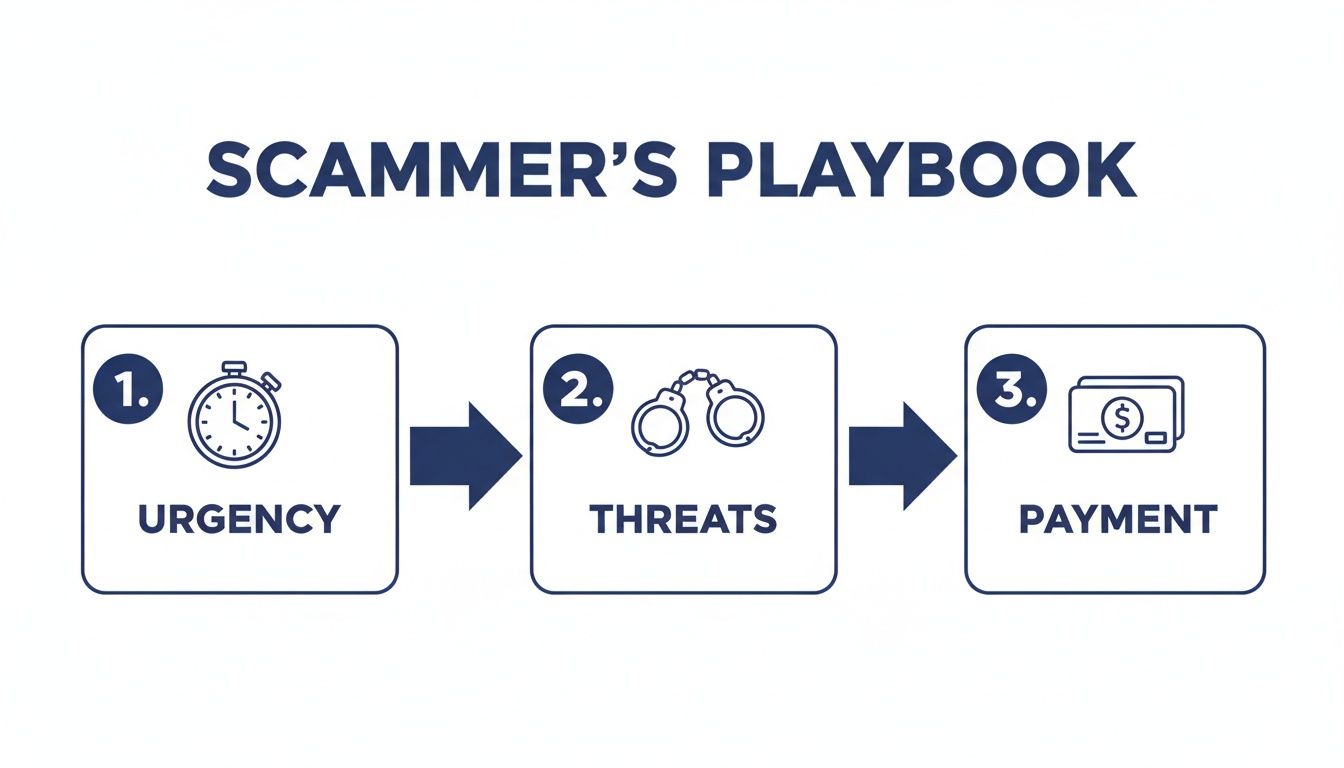
This simple three-part script is designed to short-circuit your critical thinking by creating a crisis, threatening you with dire consequences, and pushing you toward a payment method that can't be clawed back.
Step 3: Alert Michigan State and Local Authorities
If you're a Michigan resident, bringing the report home is just as important. It helps our state-level authorities spot patterns and warn other taxpayers in our communities.
Make sure to file a complaint with the Michigan Attorney General's Consumer Protection Team. They have an online form and resources specifically for imposter scams and other fraud hitting people in our state. I also recommend contacting your local police department to file a report, especially if you lost money. That police report can be a critical piece of evidence when disputing charges with your bank.
A back taxes scam can be anything from an aggressive phone call to full-blown identity theft. It's more common than you think. Nearly 1 in 4 Americans admit they've fallen for a tax scam, and for young adults, that number jumps to a shocking 42%.
Step 4: Protect Your Identity and Credit
If you think your Social Security Number (SSN) or other private information was compromised, your final step is to shield yourself from identity theft. Start by filing an IRS Form 14039, Identity Theft Affidavit. This puts the IRS on notice that your identity is at risk and adds a layer of protection to your official tax account.
Next, you'll want to place a fraud alert or, even better, a credit freeze with the three major credit bureaus:
- Equifax
- Experian
- TransUnion
A fraud alert flags your file, making it more difficult for a thief to open a new line of credit in your name. I know this whole process sounds exhausting, but these are necessary moves to secure your financial identity. And remember, if you're ever worried about a notice or call, take a deep breath and take the time to check if you owe back taxes through legitimate, official channels.
Finding Legitimate Help for Real Tax Problems
It’s completely understandable to feel wary of anyone offering tax help after you've been targeted by a scammer. The experience leaves you feeling exposed and distrustful. But here’s the crucial distinction: while the threats from a scam artist are pure fiction, a real tax debt with the IRS or the Michigan Department of Treasury is a serious matter that won't go away on its own.
The good news is that you don't have to face it alone. Our tax system has established, entirely legal pathways to help people get back on solid ground. A legitimate tax resolution firm doesn’t sell magic fixes or secret loopholes; they provide expertise in navigating these official, government-approved programs.
Your Official Options for Tax Relief
Unlike the fake "solutions" scammers invent, the IRS offers several concrete programs to help taxpayers get their heads above water. Think of these not as back-alley deals, but as formal agreements that require careful negotiation and a full, honest look at your finances.
The three most common paths we help clients navigate are:
- Offer in Compromise (OIC): This is the one you hear about most often—the "pennies on the dollar" settlement. An OIC allows certain taxpayers to resolve their liability for less than what they owe, but it's not a given. It's typically reserved for situations where a person's income and assets make it clear they could never pay the full debt. It’s a powerful tool, but the IRS has strict criteria.
- Installment Agreement (IA): This is a much more common and straightforward solution. It’s a formal payment plan that lets you pay your tax debt over time, sometimes up to 72 months. It works just like a monthly payment plan for any other major bill, but it has to be properly negotiated and approved by the IRS or Michigan Treasury.
- Penalty Abatement: Sometimes, it’s not the tax itself that’s crushing you—it's the mountain of penalties. If you can show a "reasonable cause" for not filing or paying on time (think serious illness, a house fire, or even getting demonstrably bad advice from a tax preparer), you can formally request that the penalties be forgiven. You’ll still owe the original tax, but getting rid of penalties can slash your total bill.
Successfully navigating these options takes a deep understanding of tax law and IRS procedures. This is where a true professional earns their keep—not by making impossible promises, but by building a strong, fact-based case to secure the best possible outcome the law allows.
The Power of Professional Representation
When you hire a tax law firm, you’re not just getting an advisor; you're bringing in a shield and a negotiator to stand between you and the revenue agencies. Their job is to protect your rights and make sure you get a fair shake. It’s a world away from a scammer on the phone demanding gift cards.
A qualified tax attorney or Enrolled Agent brings a few critical things to the table:
- A Buffer: They immediately take over all communication with the IRS and state authorities. The intimidating letters and phone calls stop coming to you and go to them instead.
- Strategic Planning: They perform a deep dive into your entire financial situation to figure out which relief option you can realistically qualify for. They won't just file for an OIC because you ask—they'll tell you if it's a viable path or if an Installment Agreement is a smarter bet.
- Documentation and Defense: They prepare the mountain of paperwork required for programs like an OIC and build the case to defend it in front of revenue officers.
A back-tax scammer takes your money and disappears. A real tax firm works with you from start to finish. Their success is measured by achieving a formal, documented resolution that you can actually afford and that legally settles your debt for good.
This professional approach delivers more than just a solution; it provides peace of mind.
What Scammers Promise vs. What Tax Firms Deliver
The easiest way to spot the difference between a scam and a real solution is to listen to the promises they make. Scammers guarantee instant, unbelievable results because they have no intention of delivering anything. A real firm, on the other hand, grounds its strategy in facts and procedure.
| Scammer Promises | Legitimate Firm Actions |
|---|---|
| "Settle your debt for pennies on the dollar, guaranteed!" | Conducts a thorough financial analysis to see if you even qualify for an OIC. |
| "We'll stop all collections immediately." | Files the proper forms to request a temporary, legal hold on collections while negotiating. |
| Demands upfront, untraceable payment (wire, gift card). | Provides a transparent fee structure and a formal, signed retainer agreement. |
| Guarantees a specific outcome before seeing your files. | Gives a realistic assessment of potential outcomes based on your unique financial situation. |
Trust your gut. If an offer sounds too good to be true, it is almost certainly a back-taxes scam. Legitimate help is about process, proof, and professional negotiation—not about miracles.
How a Tax Firm Protects Michigan Taxpayers
After being targeted by a back-tax scam, it's completely understandable to be suspicious of anyone offering tax help. Scammers have a way of poisoning the well, making it incredibly difficult to know who to trust.
A legitimate tax firm, however, is the direct opposite of these fraudulent operations. Think of us as the antidote. We provide a shield of protection and a clear, legal strategy to get you back on solid ground. This is where real-world experience comes in to solve the specific problems Michigan taxpayers face.
At Defense Tax Partners, we’re not about empty threats or demanding shady, untraceable payments. Our job is to be your official representative, standing between you and the tax authorities to make sure your rights are always protected.
Restoring Your Good Name After Identity Theft
One of the most devastating things we see happen from back-tax scams is identity theft. When a criminal gets your information and files a fraudulent return, it can create an absolute nightmare with the IRS. A specialized tax firm is your first call to start cleaning up that mess.
Our attorneys immediately take over all communications with the IRS. We handle the critical paperwork, like filing an Identity Theft Affidavit (Form 14039), to officially alert them to the fraud. From there, we work directly with agents to correct your tax record, remove any bogus debts tied to your name, and restore your financial identity. This isn't a quick phone call; it's a careful legal process.
When you're a victim of identity theft, you need more than just advice—you need a real advocate. Our team gets in the trenches, liaising with the IRS on your behalf to untangle the fraudulent filings and prove you are not responsible for a criminal's actions.
From Vulnerability to Resolution
Scammers are predators, and they often hunt for taxpayers who already have a real, unresolved tax issue. They exploit the fear that comes with owing the IRS or the Michigan Department of Treasury.
By getting to the root of these underlying problems, a tax firm doesn’t just solve your current debt. We eliminate the very vulnerability that made you a target in the first place.
Here are a couple of real (but anonymized) examples of how we’ve protected Michigan residents:
- Defending an Oakland County Family: An aggressive audit notice left a local family feeling completely exposed. Our attorneys stepped in, took over all communication with the revenue officer, and organized their financial records to build a strong defense, stopping the situation from spiraling out of control.
- Helping a Detroit Business: A small business had fallen behind on payroll taxes, which put a huge target on their back for scammers threatening to seize their assets. We negotiated a formal Installment Agreement with the IRS, which gave them a manageable payment plan and protected their business.
In both of these cases, we replaced chaos with a structured, legal resolution. If you’re facing a complex tax situation, our local presence across the state means reliable help is always close by. To see how we serve specific communities, feel free to explore our various tax attorney locations in Michigan.
Our process always starts with a free, confidential consultation to hear your story. We'll give you a straightforward assessment of your options and a clear plan of action. The goal is simple: turn your tax problem into a resolved issue, so you can have peace of mind and protection from future threats.
Your Questions About Back Tax Scams, Answered
When you're worried about a potential tax scam, your mind races with questions. It's completely normal. Let's walk through some of the most common concerns I hear from clients and get you some clear, straightforward answers.
Can the IRS Really Call and Threaten to Arrest Me?
Let’s be crystal clear on this one: No. This is perhaps the most common and frightening tactic scammers use, but it’s a complete fabrication.
The IRS will almost always initiate contact with a series of letters sent through the U.S. Mail, long before they would ever consider a phone call. They will never cold-call you to demand immediate payment, threaten to send the police to your door, or ask for your credit card information over the phone. A call like that isn’t the IRS being aggressive; it’s a scammer trying to create panic.
How Do I Know if a Tax Resolution Company Is Legitimate?
This is where things can get murky, but there are telltale signs. A legitimate firm will never promise you the moon—especially not before they've even seen your financial records.
Be wary of anyone guaranteeing they can settle your debt for "pennies on the dollar" in your very first conversation. A reputable firm, staffed with licensed tax attorneys or Enrolled Agents, starts with a detailed consultation. They have transparent fees and focus on finding a realistic solution based on your specific situation. High-pressure sales pitches and demands for huge upfront payments are massive red flags.
Think of a trustworthy tax professional like a good doctor: they diagnose the problem thoroughly before they prescribe a solution. They won’t sell you a miracle cure; they'll create a realistic treatment plan based on established IRS programs.
What Should I Do if a Scammer Has My Social Security Number?
If the worst happens and you believe a scammer has your Social Security Number, you have to act fast. Don't wait.
Your first move is to file an Identity Theft Affidavit (Form 14039) with the IRS. This officially puts them on notice that your identity has been compromised. Next, go straight to IdentityTheft.gov, the FTC's main hub for reporting identity theft and getting a personalized recovery plan.
You should also immediately contact the three major credit bureaus to place a fraud alert or, even better, a credit freeze on your accounts:
- Equifax
- Experian
- TransUnion
This process can feel overwhelming, which is why having a tax attorney in your corner can be so valuable. They can guide you through the necessary steps and help you clear your name with the tax authorities.
